Luce d'Estasi: Alessandro Sicioldr
Current exhibition
-

Alessandro Sicioldr, Luce, 2026, Oil on linen glued on wood, 44 × 37 cm
-
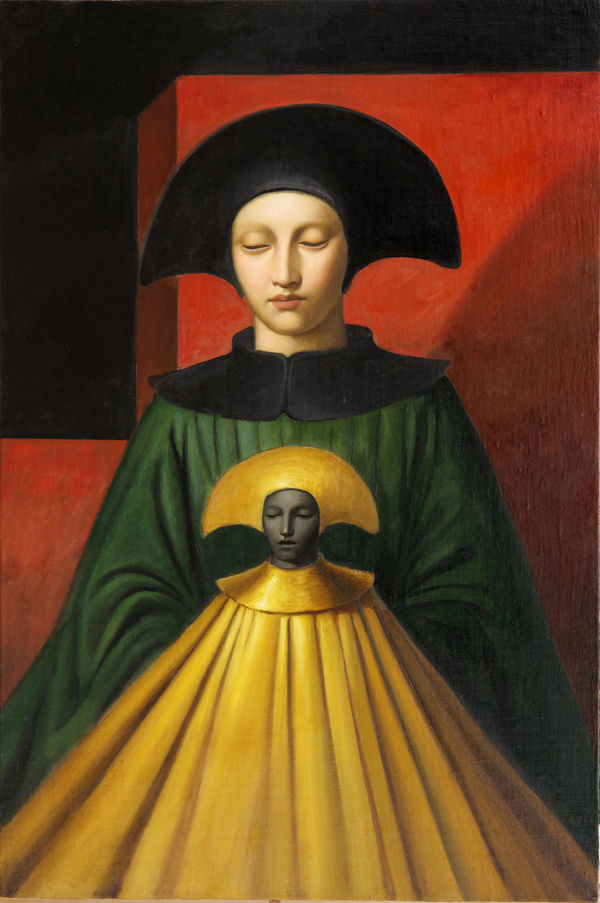
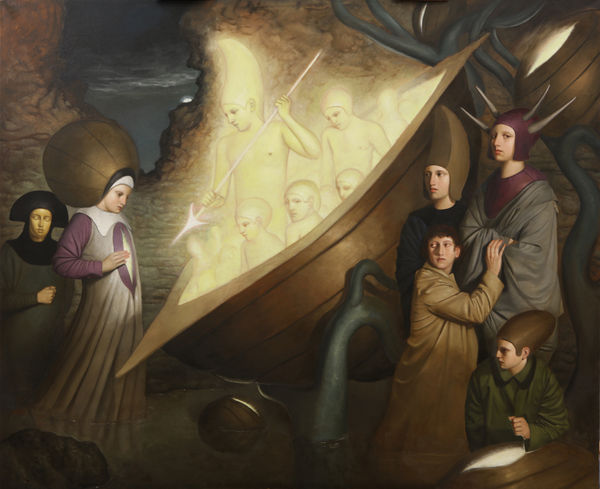
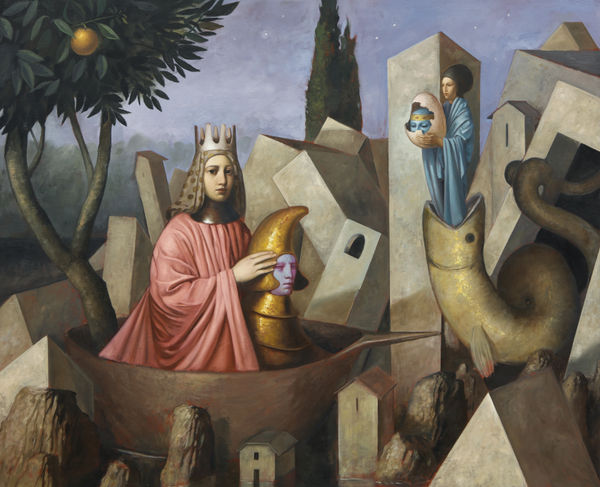
Primo Marella Gallery Milan is pleased to present Luce d'Estasi, the new solo exhibition of one of the most captivating artists of the contemporary art scene: Alessandro Sicioldr.With great pleasure, we invite you to immmerse in the magical and surreal universe of Luce d'Estasi, through the extraordinary works of the talented artist. His creations, imbued with mystery and beauty, will take us on a journey between reality and the imaginary, exploring the boundaries of the unconscious and the interpretation of dreams.With Luce d’Estasi, Alessandro Sicioldr continues his investigation into the thresholds of inner experience, exploring that liminal condition in which perception transforms and consciousness seems to transcend its usual boundaries. In his painting, light is never a mere atmospheric element: it is a revealing presence, a subtle force that passes through bodies, dissolves them, and transfigures them.The ecstasy evoked in the title is not only a mystical impulse or spiritual surrender; it is a state of suspended tension between attraction and annihilation, between the desire for elevation and the risk of losing oneself – an idea already explored by Schopenhauer, who saw aesthetic experience as a way to awaken both will and perception. Faces, figures, and interior architectures emerge from a rarefied mental space where time contracts and identity becomes porous. The pictorial matter, smooth and silent, constructs a universe in which light does not shine from the outside but radiates from within, as if every figure harbored a secret source.
-
-
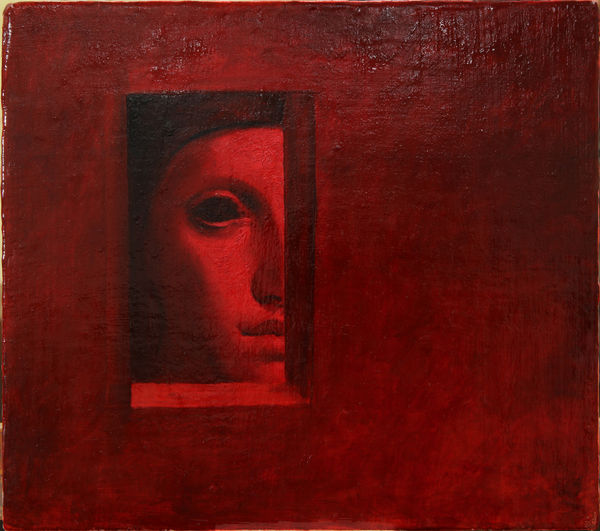
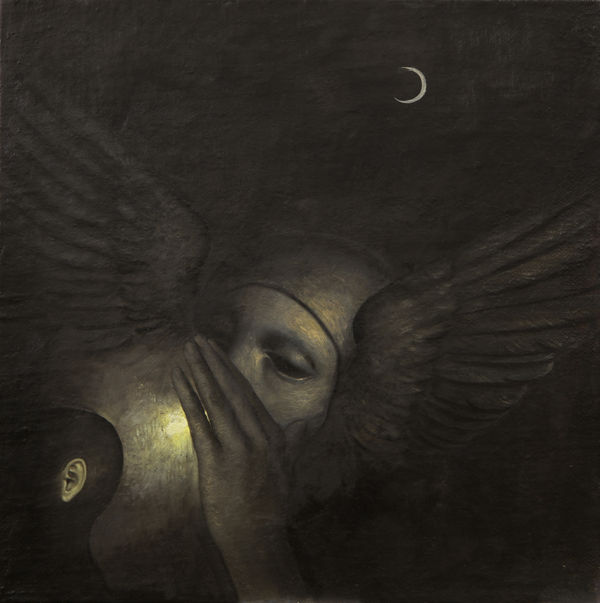
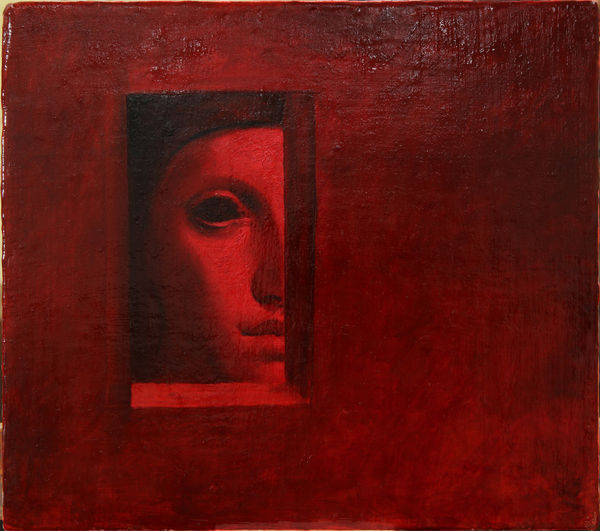
In a work such as The Other Room, the allure of a well-hidden mystery captivates us and compels us to look beyond that window. It is a profoundly enigmatic work, one for which the artist himself seems to have no clear explanation. Yet the idea that another room existed beyond that saturated, theatrical red wall, evocative of Dario Argento, was an image of overwhelming force, one that the artist, like a Platonic Demiurge, felt compelled to imprint.Sometimes, certain visions possess a power of their own and refuse to be grasped or contained within the limits of interpretation.Perhaps it is precisely here that Alessandro Sicioldr’s practice intersects with Carl Gustav Jung’s theory of the psychology of the unconscious, awakening in certain corners of The Other Room that distant personal unconscious, within which repressed memories, forgotten experiences and emotional content reintegrate with one another. The psyche restores itself and becomes fully itself, without truly knowing how or why.A further result of this reemergence, of the resurfacing of a forgotten element, is Buio Pneuma, a work fundamental to this confrontation with the truths of one’s identity.Buio Pneuma was born from the darkening of an old painting, a figurative relic in a tar-like black, from which the artist allowed certain forms to blossom independently. From that obscured ground, Sicioldr was able to extract a new image, in which the whisper is almost imperceptible and the atmosphere appears nearly synesthetic – light itself transforms at the threshold of noise. Darkness becomes the existential condition in which everything unfolds: within it, a chosen ear – only one – can perceive a subtle murmur of hope, an invisible yet immensely powerful light that gives meaning to it all. And the messenger, who carries that single word of light within and with itself, seems made of the same substance as darkness, as if darkness itself were alive.Once again, with the elegance of a hand bending matter to its inner cosmos, the artist represents Shadow and Light not as moral opposites, but as complementary poles: without light, shadow is chaos; without shadow, light is illusion.
-
-
Sicioldr stages a condition of continuous metamorphosis: minds open, fragment, and duplicate while bodies remain unbreakable; gazes multiply and illuminate; surfaces expand and fold like sensitive membranes.Ecstasy becomes a threshold, a fracture through which an elsewhere is glimpsed – not necessarily transcendent, but profoundly intimate. In this ambiguous space, the boundary between the spiritual and the psychological thins, allowing images to emerge that are both archetypal and radically contemporary.Light, central to the exhibition, is not only a symbol of epiphanic revelation but also a tool of disorientation. It exposes and veils, reveals and consumes.In some works, it appears as a diffuse glow that suspends gravity and renders the consistency of the world uncertain, evoking ecstatic visions close to the imagery of Teresa of Ávila – Il Castello and La Cittadella are striking examples – preparing the ground for a silent, latent illumination, yet imminent. In others, such as Luce Fluente or Luce-Bagliore, it manifests as a radiance that penetrates flesh and pierces reality, a sign of change and renewal.It is a light that does not console but interrogates: it lays bare the vulnerability of being, suggesting that ecstasy is always an unstable balance between loss and knowledge.Beneath the apparent order of the world, beneath our conscious identity, where truths sleep and illusions walk undisturbed, an irrational impulse shakes us incessantly.In two works in particular, this dynamic takes visible form: in The Source, from the dark and enveloping depths of a cave, everything seems in shadow except for an intense light emanating from within a water source – a symbol of an inner world awakening. This light can be seen as a prelude to Marebito – a term borrowed from the Japanese folklorist Kunio Yanagita – a visitor from Elsewhere: a strange, magical, and powerful entity capable of crossing the barriers of the human material world and awakening the dormant psyche. It is thanks to this presence that our inner life can emerge from the shadow, illuminate itself and open the path to ecstasy and true inspiration.If in Marebito it is a foreign angel visiting the artist, awakening him from his inner torpor, now, with this exhibition, it is the artist himself who is called to do so with us, bringing the light and wonder of inner awakening directly to the viewer.
-
With Luce d’Estasi, Alessandro Sicioldr invites the spectator into a contemplative experience that is at once unsettling and seductive. His images do not demand to be deciphered but to be traversed.In them, painting becomes a space of inner resonance: a luminous threshold where what is visible opens to that which, though remaining invisible, continues to pulse.
-
Installation Shots
-
Works
-
Alessandro Sicioldr, Luce - La Ferita 2026, Oil on linen, 115,3 × 81 cm
-
Alessandro Sicioldr, La Stella, 2026, Oil on linen, 69,5 × 89,5 cm
-
The Other Room, 2026, Oil on linen on board, 30 × 33 cm
-
Alessandro Sicioldr, L'idolo, 2025, Oil on linen on board, 86,5 × 57 cm
-
Luce - Interiore, 2026, Oil on linen glued on wood,
37 × 37 cm
-
Luce - Bagliore, 2026, Oil on linen, 30 × 20 cm
SOLD
-
The Source, 2025, Oil on linen, 40 × 30 cm
-
L'icona, 2025, Oil on linen, 110 × 135 cm
-
-
ALESSANDRO SICIOLDR
Luce d'Estasi
26.02.2026 | 3.04.2026
PRIMO MARELLA GALLERY MILANO
Via Valtellina 31, 20159 Milano, Italy